

The latest news from the United States
Provided by AGP
IRLabs Donation Brings Advanced Semiconductor Failure Detection to University of Arizona Cleanroom
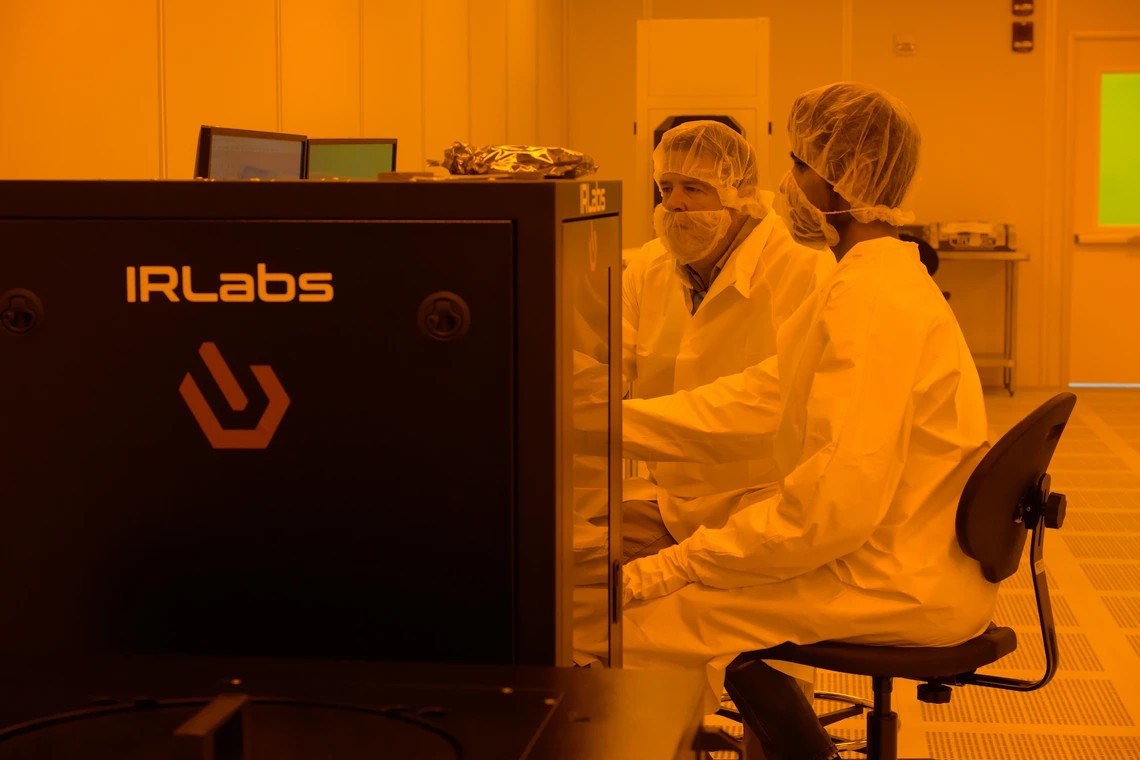
Students at University of Arizona’s Center for Semiconductor Manufacturing using IREM for fault analysis.
System enables detection of ultra-low signal defects in modern chips and supports workforce training
Our technology allows engineers to see inside devices and identify issues that would otherwise go undetected — issues that can have significant cost and performance implications.”
TUCSON, AZ, UNITED STATES, May 4, 2026 /EINPresswire.com/ -- IRLabs, a developer of advanced infrared detection and semiconductor failure analysis technologies, has donated a high-performance infrared emission microscope system to the University of Arizona’s Center for Semiconductor Manufacturing. The system is installed in the university’s ISO 5 semiconductor cleanroom, part of a recently expanded, state-of-the-art nanofabrication facility.— Manny Teran, CEO of IRLabs
The system enables researchers and students to detect and analyze small, difficult-to-find defects inside modern semiconductor devices before they lead to costly production failures. Even a single defect can result in millions of dollars in losses during semiconductor production.
As semiconductor devices continue to shrink, identifying failure points has become increasingly challenging. IRLabs’ IREM technology addresses this by detecting ultra-low levels of infrared photon emissions generated by defects such as leakage currents, hot spots and junction anomalies — without damaging the device.
“Modern chips operate at a level where failures are often invisible to conventional tools,” said Manny Teran, CEO of IRLabs and a University of Arizona alumnus. “Our technology allows engineers to see inside devices and identify issues that would otherwise go undetected — issues that can have significant cost and performance implications.”
The donated system brings industry-grade failure analysis capabilities into an academic environment, allowing University of Arizona students and researchers to train on the same class of tools used by leading semiconductor manufacturers to ensure quality and reliability.
“This is about more than equipment — it’s about enabling the next generation of engineers to work at the cutting edge of semiconductor technology,” Teran said. “By giving students access to advanced diagnostic tools, we’re helping bridge the gap between academic training and real-world manufacturing challenges.”
Unlike traditional destructive testing methods, the IREM system allows for noninvasive inspection through silicon and packaging, preserving devices while enabling precise defect localization. This capability is increasingly important as advanced semiconductor nodes push the limits of manufacturing precision.
The donation also supports Arizona’s growing role in semiconductor innovation by contributing to workforce development and research capacity.
IRLabs has a long history of innovation in infrared detection technologies, with applications in astronomy, defense and semiconductor manufacturing. The company’s continued collaboration with the University of Arizona reflects a shared commitment to advancing research, education and industry impact.
For more information, visit irlabs.com.
About IRLabs
IRLabs is a leader in advanced infrared detection and diagnostic systems, enabling high-performance applications in semiconductor failure analysis, scientific research and aerospace. Founded in 1967 by Dr. Frank J. Low, regarded as the “co-father of infrared astronomy,” the company pioneered technologies for detecting low levels of infrared light, contributing to innovations used in modern space telescopes, including the James Webb Space Telescope.
Today, IRLabs applies this expertise to semiconductor manufacturing, delivering tools that detect ultra-low signal defects and support improved device reliability, yield and performance. Learn more at irlabs.com.
Shelly Glandon
Blue Canoe Marketing
+1 520-400-4767
email us here
Visit us on social media:
LinkedIn
YouTube
Legal Disclaimer:
EIN Presswire provides this news content "as is" without warranty of any kind. We do not accept any responsibility or liability for the accuracy, content, images, videos, licenses, completeness, legality, or reliability of the information contained in this article. If you have any complaints or copyright issues related to this article, kindly contact the author above.
