

Traditional herb offers new hope for antibiotic-free pig farming
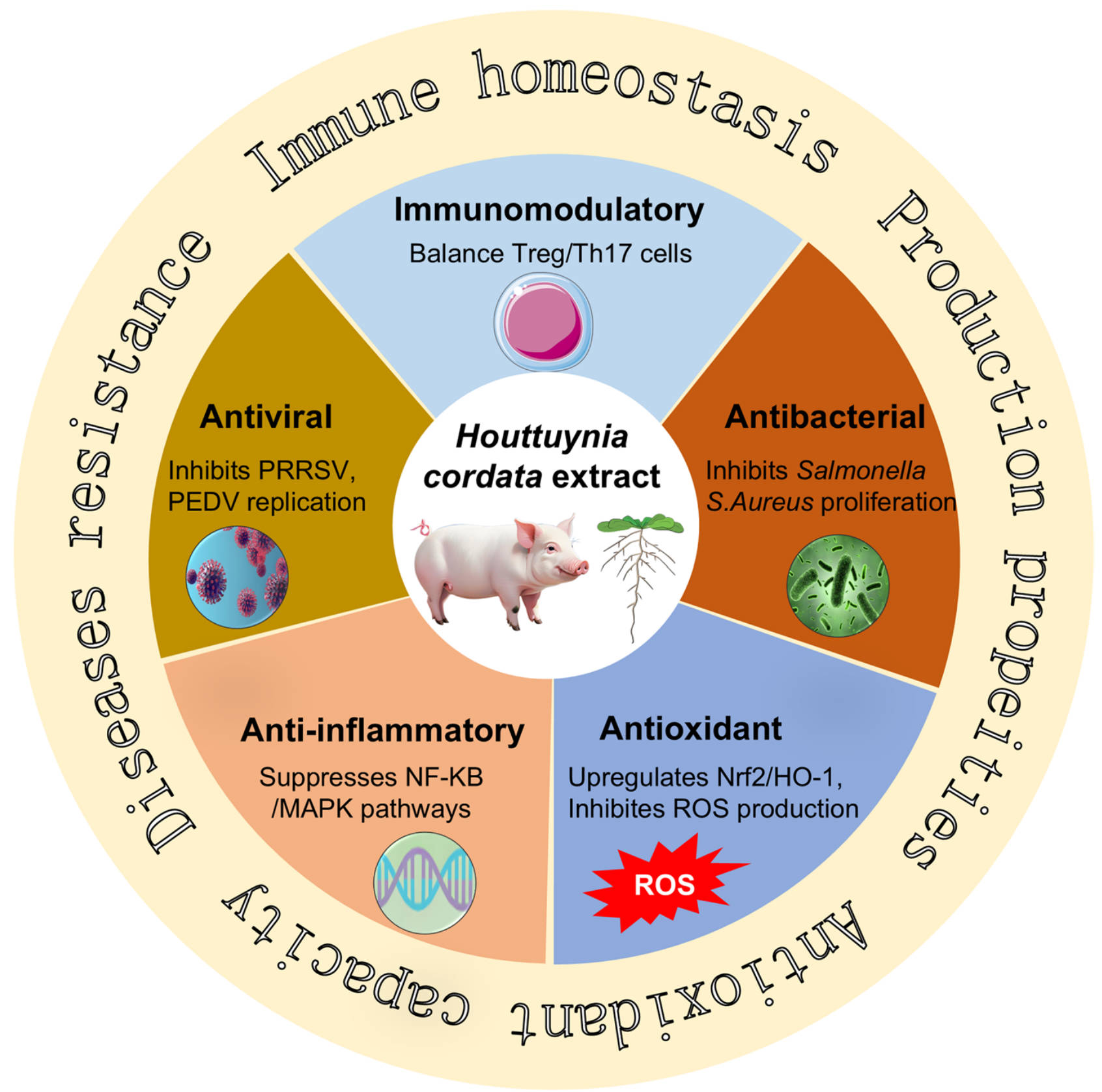
Multifaceted biological functions of Houttuynia cordata extract in swine health and production.
GA, UNITED STATES, December 15, 2025 /EINPresswire.com/ -- Houttuynia cordata extract, a traditional medicinal plant-derived product, is emerging as a potential alternative to antibiotics in pig production. The extract demonstrates broad antimicrobial, antioxidant, anti-inflammatory, and immune-regulating effects, helping pigs fight bacterial and viral infections while improving gut integrity, growth, and reproductive performance. Rich in bioactive flavonoids such as quercetin and hyperoside, it reduces oxidative stress, suppresses inflammatory pathways, enhances intestinal barrier function, and reinforces immune response. Its multifunctionality suggests that this natural compound may help reduce antibiotic dependence in livestock systems and contribute to safer and more sustainable pig farming practices.
Overuse of antibiotics in livestock has accelerated antimicrobial resistance, threatening animal productivity, food safety, and global public health. Drug residues and resistant pathogens further raise concerns along the food chain. As regulatory restrictions tighten, the livestock industry urgently requires effective bio-based health interventions. Traditional medicinal plants have long served as natural remedies for infection and inflammation, and Houttuynia cordata has gained attention for its potent activity against both pathogens and oxidative damage. Based on these challenges, exploring plant-derived antimicrobial alternatives for pig production has become increasingly necessary.
A research team from Wuhan University of Bioengineering and Huazhong Agricultural University, together with collaborators, published (DOI: 10.1186/s44149-025-00203-9) a new review in Animal Diseases on January 2025, highlighting that Houttuynia cordata extract could serve as a multifunctional natural substitute for antibiotics in swine production. The study summarizes accumulating evidence that plant-derived flavonoids, volatile oils, and polysaccharides suppress pathogens including Salmonella, PRRSV, and Streptococcus suis, while simultaneously reducing inflammation and oxidative stress to support healthy growth in pigs.
The extract's efficacy stems from multiple synergistic mechanisms. Bioactive flavonoids—particularly quercetin, hyperoside, and rutin—exhibit strong antioxidant capacity by scavenging reactive oxygen species and activating Nrf2-mediated defense pathways. These compounds inhibit inflammatory cytokines such as TNF-α, IL-6 and NO by blocking TLR4/NF-κB and MAPK signaling. Meanwhile, volatile components including 2-undecanone demonstrate antimicrobial activity and protect tissues from oxidative injury.
In vitro and animal studies show that H. cordata extract suppresses Staphylococcus aureus, E. coli, Pseudomonas aeruginosa and antibiotic-resistant MRSA. It also inhibits major swine viruses: quercetin blocks PRRSV and pseudorabies virus entry by binding viral proteins, and quercetin-7-rhamnoside reduces PEDV replication at extremely low concentrations.
For production performance, dietary supplementation improves intestinal barrier integrity, increases tight-junction proteins, alleviates weaning and transport stress, and enhances nutrient absorption. Trials further indicate reductions in fecal E. coli and improvement in growth metrics. Evidence also points to potential benefits in reproductive health through oxidative stress reduction, though dosage and long-term reproductive impacts require further evaluation.
“The multifunctional nature of Houttuynia cordata gives it unique potential as a natural feed additive,” the authors noted. “Its combined antimicrobial, anti-inflammatory and immune-supporting actions provide systemic protection rather than targeting a single pathogen. This makes it a promising candidate for reducing antibiotic use in swine farming. However, optimal dosages, safety profiles, and reproductive impacts must be clearly established before large-scale adoption.”
The findings highlight Houttuynia cordata extract as a strong contender for antibiotic substitution in modern pig farms. By improving gut health, enhancing antioxidant capacity and lowering infection risk, the extract may reduce medical costs, prevent growth loss during stress periods, and support more sustainable animal husbandry. Its plant-derived properties also align with consumer demand for safer meat products and reduced antimicrobial resistance. Future work should include clinical validation, formulation optimization and combined use with probiotics or vaccination strategies for industry-ready application.
DOI
10.1186/s44149-025-00203-9
Original Source URL
https://doi.org/10.1186/s44149-025-00203-9
Funding information
This study was underpinned by the National Natural Science Foundation of China (No. 32472981, 32172808), the Wuhan University of Bioengineering High-level Talent Research Start-up Fund (2024KQ03), and the open funds of the State Key Laboratory of Agricultural Microbiology (AMLKF202512).
Lucy Wang
BioDesign Research
email us here
Legal Disclaimer:
EIN Presswire provides this news content "as is" without warranty of any kind. We do not accept any responsibility or liability for the accuracy, content, images, videos, licenses, completeness, legality, or reliability of the information contained in this article. If you have any complaints or copyright issues related to this article, kindly contact the author above.
