

Disruptive Futures Institute Defines 2026 as a Critical Threshold for the ‘Decade of Techistentialism’
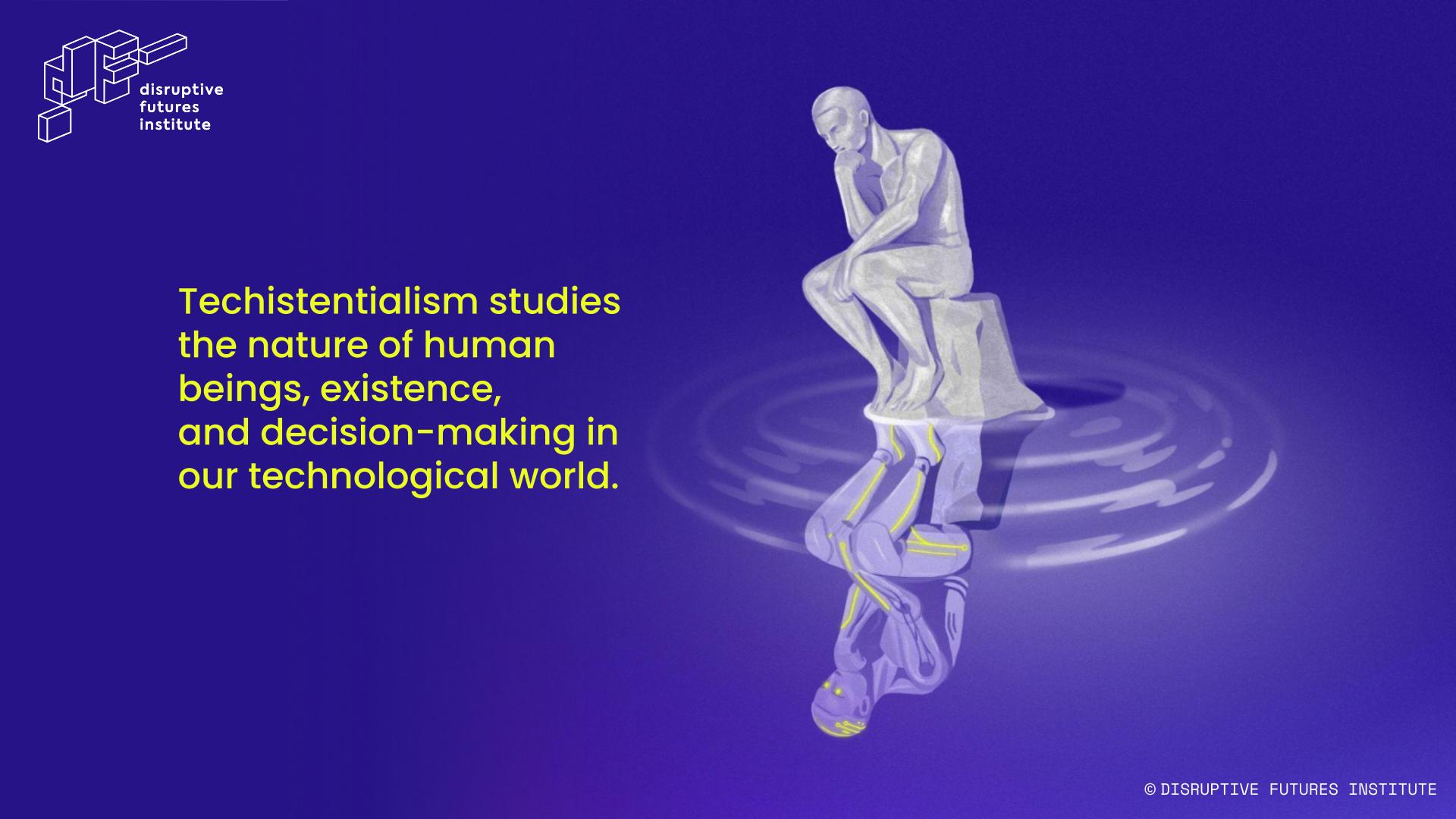
Techistentialism Definition

Roger Spitz Opening Keynote - The Future Congress
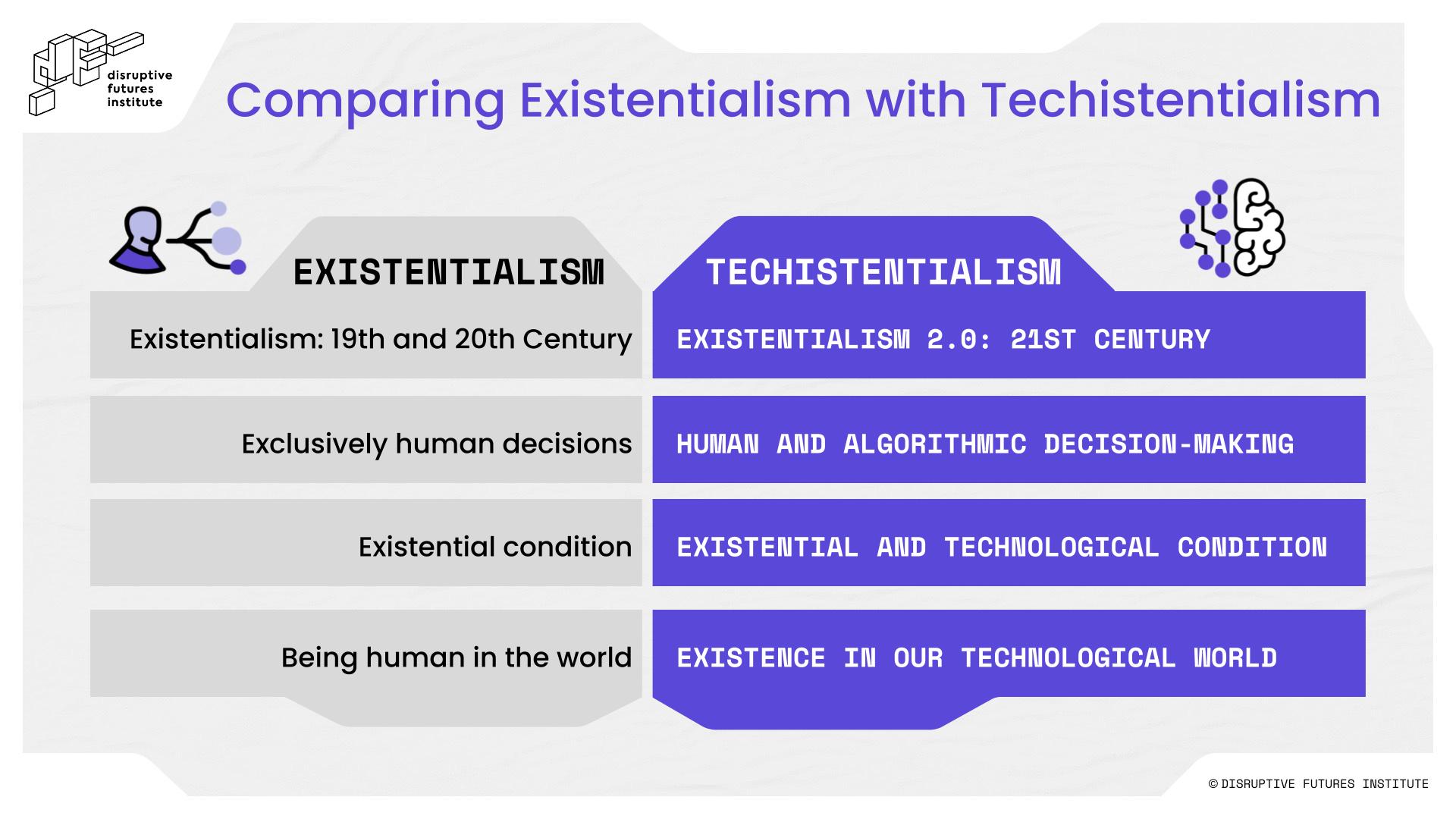
Comparing Techistentialism to Existentialism
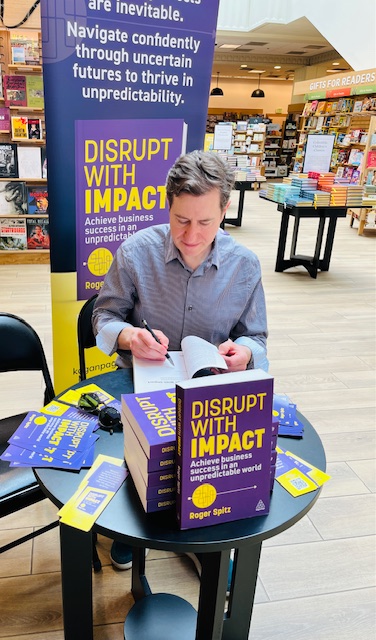
Roger Spitz 'Disrupt With Impact' Book Signing at Barnes & Noble in Los Angeles
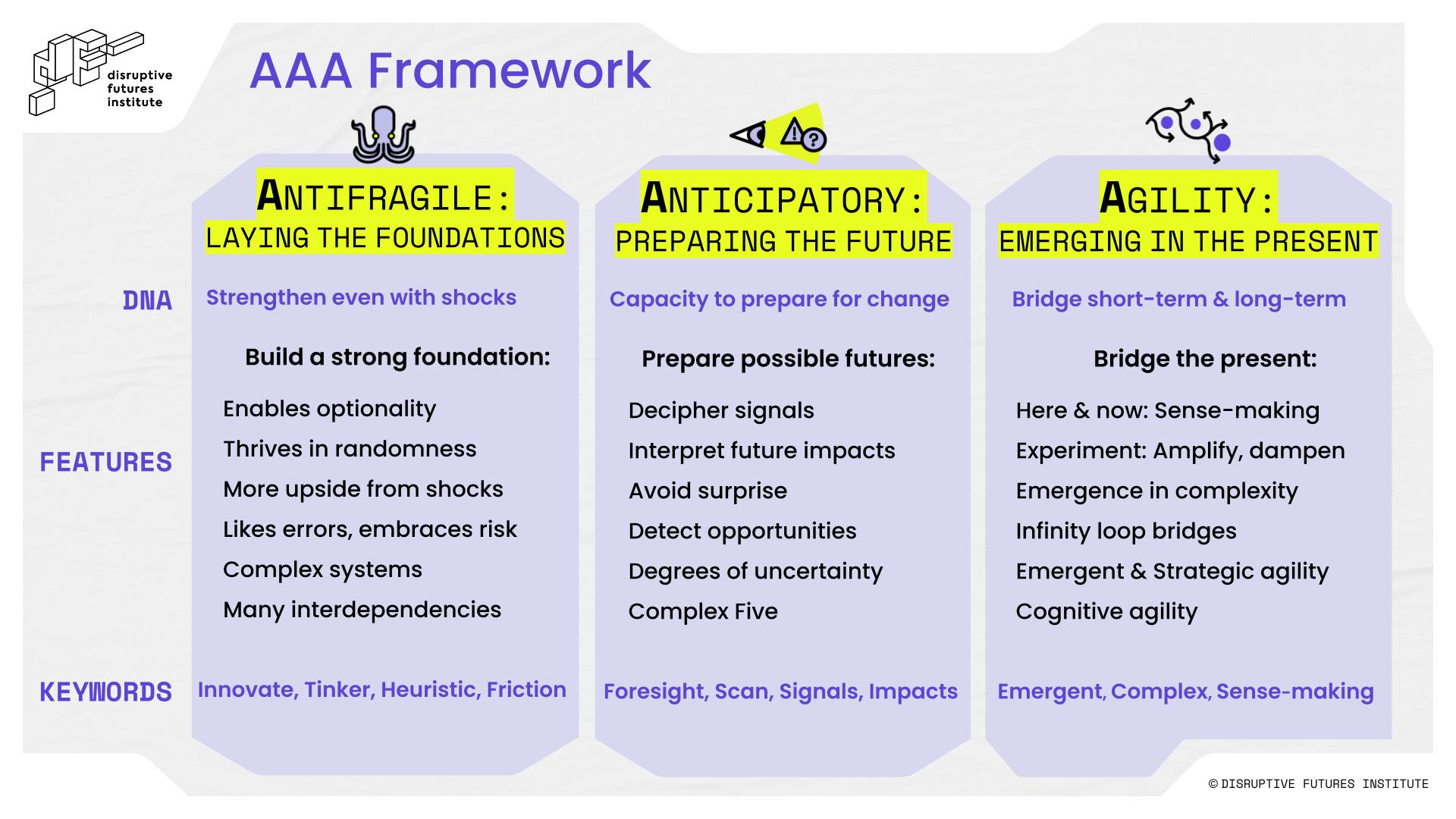
AAA Framework - Roger Spitz (Disruptive Futures Institute)
Marking Ten Years of Techistentialism, the Disruptive Futures Institute Mobilizes Global Initiatives to Reclaim Human Agency as the Architect of the Futures
SAN FRANCISCO, CA, UNITED STATES, December 14, 2025 /EINPresswire.com/ -- Phenomena once dismissed as distant theoretical challenges have collapsed into immediate, concrete realities. As the world approaches 2026 - now statistically closer to 2050 than to 2000 - society enters a decisive transition. The Disruptive Futures Institute (DFI) today confirms that the erosion of agency - once the central warning of Techistentialism - has crystallized into the defining condition of the present.
With 2026, the preservation of human agency ceases to be a default condition; it demands deliberate assertion against algorithmic determinism.
The Disruptive Futures Institute defines this 10-year milestone (2016–2026) as an inflection point - moving the Techistential mission from diagnosis to active defense. It has been a decade since founder Roger Spitz first articulated the philosophy that would evolve into a critical strategic foresight and anticipatory governance framework for the algorithmic age.
THE ORIGINS OF THE PIVOT
The origins of the Techistential movement trace back to 2016, when Spitz - then Global Head of Technology M&A at one of the world’s largest investment banks - identified a growing structural disconnect between human judgment and increasingly automated, often fragile, decision systems. That observation marked an inflection point, leading to the early incarnations of the foresight practice Techistential in San Francisco in 2017, before its formal establishment in 2019.
In 2020, following years advising CEOs, boards, and investors on major technology acquisitions, divestments, venture funding, and IPOs, Spitz made a deliberate decision to step away from investment banking to focus on a different problem: how leaders make sense of uncertainty in an increasingly complex, nonlinear world. His aim was to codify a new, antifragile “operating system” for decision-making and sustainable value creation under conditions where traditional “predict and act” models no longer hold.
As the advisory arm of the Disruptive Futures Institute, award-winning Techistential practice scaled this approach into proprietary foresight frameworks, applied research, and education programs designed to help organizations anticipate second- and third-order impacts of accelerating change, and to rethink anticipatory leadership for the realities of the complex, unpredictable 21st century.
In examining this shift, Spitz described what he termed a “Faustian Existential Pact” - the gradual exchange of human agency, freedom, and choice for automation, augmentation, and cognification. He coined Techistentialism to frame the ontological context of our time: a period in which human existence and technological acceleration have become inseparable, reshaping how decisions are made, delegated, and governed.
THE 2026 MANDATE: FROM C-SUITE TO A-SUITE
As 2025 draws to a close, the evolution of Artificial Intelligence in the strategic decision-making value chain has accelerated, validating the Disruptive Futures Institute’s earliest warnings. DFI research identifies a critical migration of authority: the “C-Suite” is rapidly ceding ground to the “A-Suite” (Algorithmic Executives).
In this emergent reality, the boardroom is no longer the exclusive domain of human judgment. We are witnessing the rise of Prescriptive AI - systems that do not merely analyze possibilities, but autonomously evaluate and execute decisions based on perceived “optimal” returns, often bypassing human involvement entirely.
This signals a Transformation Scenario where society risks discarding its role as the driver of decision-making in an overwhelmingly complex world. Without deliberate intervention, this trajectory leads to a future where human agency is replaced by algorithmic efficiency.
“Ten years ago, the question was whether technology would serve us. Today, the question is whether we still have the agency to define our own essence,” says Roger Spitz, Chair of the Disruptive Futures Institute. “We coined Techistentialism in 2016 not just as a word, but as a provocation against ‘Superstupidity’ - the risk of humans and technology sleepwalking into a future defined entirely by prescriptive systems. As we enter 2026, our mandate is clear: we must build on the question of how to govern tools, to also understand how these tools - no longer discernible from the architects - are redefining humanity itself.”
As technology and decision-making become inseparable, the next few years will determine whether humanity retains agency - or merely optimizes it away.
A DECADE OF FORESIGHT & THE DECADE AHEAD FOR TECHISTENTIALISM
Since its inception in 2016, Techistentialism has moved from an emerging philosophy to a critical framework for addressing the most pressing decision-making challenges of the technological age.
In the 2020s, the Internet of Existence (IoE) shifted from simple digitization to Cognitive Systems of Existence (CoEx). At the Disruptive Futures Institute, we identify this as the moment where embedded intelligence dissolves the distinction between matter and mind.
CoEx Defined: Self-sustaining artificial ecologies that perceive, decide, and evolve. They emerge when biological, societal, technological, geological, physical, and informational domains become deeply intertwined through embedded intelligence.
As matter itself develops into living technological systems, we confront a core Techistential question: Are these new inorganic cognitive substrates becoming as fundamental to our existence and agency as our own biological substrates?
STRATEGIC INITIATIVES FOR 2026
To equip organizations for the era of “CoEx” - where shifting forms of intelligence define the Techistential landscape - the Disruptive Futures Institute is launching five global initiatives for 2026:
• Strategic Foresight Advisory: Through Techistential, the Institute will continue to advise leadership teams, boards, and policymakers on anticipatory governance and sustainable value creation.
• Executive Education Programs: Leveraging years of applied research, the Disruptive Futures Institute codifies new actionable frameworks now used by boards and organizations worldwide. These include the AAA Framework (Antifragile, Anticipatory, Agility) and the 6 i’s - a cognitive toolkit empowering the C-Suite to retain value over the A-Suite: Intuition, Inspiration, Imagination, Improvisation, Invention, and the Impossible. Enriched by real-world case studies, these proprietary frameworks power the Institute’s cutting-edge learning programs for the Techistentialist era.
• Techistential Center for Human & Artificial Intelligence: A major investment in research and education focused on AI’s impacts, governance, and ethics, specifically exploring the future of strategic decision-making in a world where human and machine intelligence are increasingly intertwined.
• New Publications & Research: Building on the global success of the seminal four-volume The Definitive Guide to Thriving on Disruption and award-winning Disrupt With Impact, the Disruptive Futures Institute will release a new series of “Techistential Briefings” and manuscripts throughout 2026. These publications will continue to codify the frameworks for the Intelligence Shift, providing leaders with an “operating system” for decision-making in the algorithmic age.
• The ‘Intelligence Shift’ Global Keynote Tour: A new flagship series led by Roger Spitz, designed to operationalize Techistentialism for global leadership and equip audiences with the mindset to invent the impossible.
THE 2026 VISIONARY TRILOGY: THREE FLAGSHIP TRACKS
As a top-ranked futurist and globally sought-after authority, Roger Spitz has headlined the world’s most prestigious innovation stages - from MIT Technology Review’s EmTech and Singularity University to Nasscom, the World Economic Forum, and Europe’s leading future think tank, 2b AHEAD.
Building on these defining appearances at major technology conferences and exclusive boardroom briefings, Spitz now unveils the 2026 Visionary Trilogy. This new keynote framework is designed to operationalize Techistentialism for global leadership, offering a structured approach to rethinking how executives, investors, and policymakers think, decide, and lead in a nonlinear world.
• Trilogy Theme 01. THE MINDSET SHIFT - Become Visionary in an Unpredictable World:
Change is slow - until it isn’t. Hyperconnectivity now amplifies disruption far beyond the cyclical upheavals of the past. In this nonlinear environment, traditional assumptions and backward-looking analysis have become liabilities. This track demands a fundamental Mindset Shift from fear to foresight. By abandoning outdated playbooks and adopting a new operating system for uncertainty, we become shapers of tomorrow rather than its victims. Together, we explore uncharted waters guided by a compass built for unpredictability.
• Trilogy Theme 02. THE INTELLIGENCE SHIFT - Upgrade Human Decision-Making in the Age of AI:
Automation, augmentation, and cognification are reshaping the decision-making value chain. As algorithms advance from descriptive to prescriptive roles, this track examines the core Techistential challenge: how human judgment can retain its edge when machines encroach on higher-order decisions.
• Trilogy Theme 03. THE LEADERSHIP SHIFT - Foresight to Inspire Transformational Futures:
Systemic disruptions - from geoeconomic shocks to emerging technologies - are redistributing trillions of dollars. How can leaders leverage deep uncertainty to create sustainable value? The answer lies not in prediction, but in preparation. Roger Spitz introduces his acclaimed AAA Framework, enabling leaders to build Antifragile foundations that grow stronger with shocks, develop an Anticipatory mindset, and use Agility to bridge today’s choices with tomorrow’s possibilities. The winners will be those who anticipate and adapt; the rest risk irrelevance.
THE TECHISTENTIAL FOCUS: THE INTELLIGENCE SHIFT
A centerpiece of the 2026 tour is The Intelligence Shift. Artificial intelligence is redefining domains once considered uniquely human. As augmentation and automation transform the world, we must ask: What higher-order functions will machines soon perform? And where will human judgment retain its edge?
This brings us to the Techistential Era - a term coined by Roger Spitz to describe the collision of technological capabilities and existential challenges. As algorithms increasingly drive our choices, the risk lies not just in trusting machines, but in surrendering our agency.
“The greatest danger we face is not AI achieving superintelligence, but humans succumbing to ‘superstupidity’ - thinking like idle machines and relying on data that cannot navigate unpredictable futures,” warns Spitz. “After all, there is no data on the future.”
Staying relevant in this hybrid future demands a fundamental Intelligence Shift. We must embrace shoshin (a beginner’s mind) to fuel curiosity, navigate uncertainty, and challenge every assumption. Through a continuous cycle of learning, unlearning, and relearning, we foster the experimentation required to unlock creativity.
To thrive, we must reclaim our decision-making edge. While algorithms can calculate the probable, only humans can invent the impossible.
KEY HIGHLIGHTS ON ROGER SPITZ’S KEYNOTE SPEAKING
Roger Spitz has reached millions worldwide through keynotes, media appearances, and advisory work. He delivers transformational insights forged in the crucible of Wall Street boardrooms, Silicon Valley dealmaking, and cutting-edge futures research.
• Top Ranked Global Futurist & Technology Luminary Speaker
• Hailed on CNN as the world’s leading futurist on disruption.
• Creator of TechistentialismTM, the pioneering philosophy for leading in the AI era
• Developer of globally adopted AAA Framework, featured by MIT Technology Review, World Economic Forum & Global Peter Drucker Forum
• Delivered 500+ Keynotes to 100,000+ leaders across 6 continents and 40+ countries
• Author of 5 bestselling books, including multi-award-winning Disrupt With Impact
• Trusted advisor to CEOs, boards, investors, and the World Economic Forum
• Founder of the award-winning Disruptive Futures Institute and Techistential Center for Human & Artificial Intelligence (San Francisco)
• Built and led Global Technology M&A practices (San Francisco • London • Paris) - advising on $25B+ in transactions
• Top Voice Award Recipient & ranked Top 10 in Management Leadership (Thinkers360)
Be part of the conversation. To discuss booking a keynote for your team or clients:
• Email: speaking@disruptivefutures.org
• Explore: https://www.disruptivefutures.org/speaking
For media inquiries and interviews: media@disruptivefutures.org
###
NOTES TO EDITORS
ABOUT THE DISRUPTIVE FUTURES INSTITUTE
The Disruptive Futures Institute, founded by leading futurist Roger Spitz and headquartered in San Francisco, is the preeminent global think tank offering thought leadership, executive education, and strategic intelligence to empower organizations and changemakers worldwide. The Disruptive Futures Institute redefines futures studies and strategy by providing updated concepts, adaptive frameworks, and operational methodologies.
ABOUT ROGER SPITZ
Roger Spitz is a top-ranked futurist and keynote speaker. His headline keynote presentations provide clarity, informed optimism, and actionable intelligence amid constant change.
Author of five bestsellers, including the acclaimed Definitive Guide to Thriving on Disruption and Disrupt With Impact: Achieve Business Success in an Unpredictable World, Spitz’s frameworks are adopted by organizations worldwide.
Spitz is a leading expert in artificial intelligence. He coined the term Techistentialism, founded the Techistential Center for Human & Artificial Intelligence, and contributes an AI column for MIT Technology Review in Brazil. He is a venture partner at Berkeley SkyDeck and Vektor Partners, advising and investing in AI and deep tech startups. Spitz also serves on the AI Council of the Indian Society for Artificial Intelligence and on the World Economic Forum’s AI Global Alliance. He publishes extensively and speaks globally on the intelligence shift: exploring the future of AI and decision-making.
Spitz previously led Global Technology M&A at BNP Paribas, advising on more than 50 transactions valued at $25 billion. He also launched the bank’s U.S. M&A investment banking practice in San Francisco, established its European Technology & Digital Corporate Finance platform, and led the Aerospace & Defense advisory activities in London and Paris.
ABOUT TECHISTENTIALISM
Techistentialism, a play on the terms technology and existential, studies the nature of human beings, existence, and decision-making in our technological world. Today, we face both technological and existential conditions that can no longer be separated. We define this phenomenon as Techistentialism.
Techistentialism broadens the definition of technology’s “existential risks” to include the curtailment of human agency. This brings the discussion back to a core meaning of “existential,” beyond physical threats, to consider the deep importance of meaningful human autonomy. Instead of treating AI primarily as a speculative future danger, Techistentialism also focuses on immediate, human-centric vulnerabilities, advocating for the cultivation of human capabilities - Antifragile, Anticipatory, and Agility - as essential for relevance in the 21st century.
Roger Spitz’s strategic foresight practice is called Techistential. Techistential is a global Foresight Strategy & Futures Intelligence advisory practice based in San Francisco.
What are the Philosophical Foundations of Techistentialism?
Martin Heidegger, the German existential philosopher, long challenged the view that we actually master technology, or that we have the ability to solve any collateral issues that may arise as technology evolves. As technology continues to come into existence, it may reveal itself to be beyond our involvement. In this case, as technology grows beyond our control, it is not merely a human activity. It is the paradox of technology, the magic at one end and hazards at the other, which gives technology a unique status.
Standing on the shoulders of Heidegger and fellow philosopher Søren Kierkegaard, it was Jean-Paul Sartre who so powerfully articulated the human condition: “existence precedes essence.” By this, Sartre meant that our agency emerges through choice. While existence is indeterminate and thus unknowable, we are always defining our essence as it emerges and, in doing so, moving in a direction that we define.
Techistentialism and its Implications on the Future of Human Decision-Making
If humans fail to become sufficiently AAA - anticipatory, antifragile, and agile - rapidly learning machines could surpass our abilities. Machines do not have to reach Artificial General Intelligence (AGI) or become exceptional at handling complex systems - they just need to be better than us.
Today, humanity faces technological and existential conditions that can’t be separated. We define this phenomenon as “Techistentialism.” Our existential condition is an uncertain one, considering the inherent dualities and paradoxes of life. Our techistential condition is no different.
The paradox of technology - its magic and hazards - gives it a unique status. As Heidegger suggests, technology “drives out every other possibility of revealing.” Technology is so dominant that it can eclipse all other ways we understand the world.
Media Contact
Disruptive Futures Institute
email us here
Visit us on social media:
LinkedIn
Instagram
YouTube
X
Other
ROGER SPITZ | KEYNOTE SPEAKER SHOWREEL (Abridged 2 mins)
Legal Disclaimer:
EIN Presswire provides this news content "as is" without warranty of any kind. We do not accept any responsibility or liability for the accuracy, content, images, videos, licenses, completeness, legality, or reliability of the information contained in this article. If you have any complaints or copyright issues related to this article, kindly contact the author above.
